


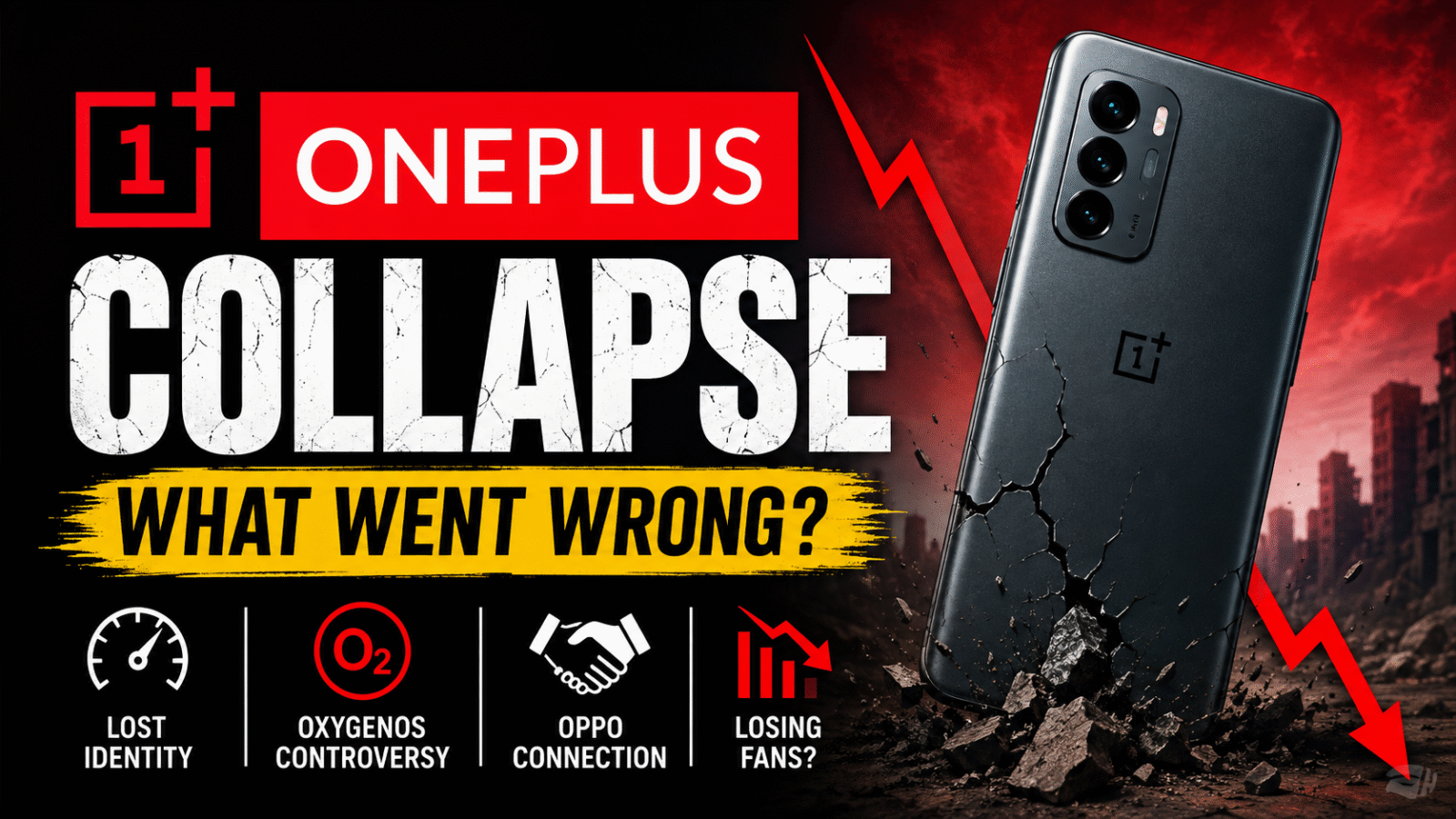
OnePlus was once one of the most exciting names in the smartphone industry. Launched with the philosophy of offering flagship-level hardware at aggressive prices, the company quickly built a loyal fan base. Its early smartphones challenged established brands and popularized the idea of a “flagship killer.”
But today, many longtime fans argue that OnePlus has lost the identity that made it special. The company has become more mainstream, its products increasingly resemble those of its parent ecosystem, and its original enthusiast-focused approach has faded. So, did OnePlus really collapse—or did it simply change?
The Rise of OnePlus
OnePlus entered the smartphone market in 2014 with the OnePlus One. The phone offered specifications that competed with expensive flagship devices while costing significantly less.
Its invitation-based sales model, aggressive pricing, clean software and enthusiastic online community generated enormous attention. OnePlus soon became particularly popular among technology enthusiasts who wanted powerful hardware without paying flagship prices.
Phones such as the OnePlus 2, OnePlus 3, OnePlus 5 and OnePlus 6 helped establish the company’s reputation.
The message was simple: why pay more for a flagship when OnePlus can give you almost the same experience for less?
The Beginning of the Change
As OnePlus grew, maintaining extremely low prices became increasingly difficult. Better cameras, premium materials, advanced displays, 5G connectivity and more sophisticated components increased manufacturing costs.
At the same time, OnePlus began expanding into more product categories and price segments.
The company gradually moved away from its original “flagship killer” strategy and started competing directly in the premium smartphone market.
This wasn’t necessarily a business failure. In fact, becoming a larger and more established brand can be viewed as a success. However, it created a problem: OnePlus started losing the uniqueness that made people love it.
The OxygenOS Controversy
One of OnePlus’s biggest advantages was its software.
Early versions of OxygenOS were praised for being fast, clean and close to stock Android while still providing useful customization options. For many enthusiasts, OxygenOS was a major reason to choose OnePlus.
Over time, however, OnePlus moved closer to the software approach of OPPO, particularly after the two companies became increasingly integrated.
The changes generated criticism from longtime users who felt that OxygenOS was losing its original personality.
For fans who had associated OnePlus with clean and lightweight software, this was a significant shift.
The OPPO Connection
OnePlus is part of the larger BBK-related smartphone ecosystem and has increasingly shared technology, resources and platforms with OPPO.
From a business perspective, this makes sense. Shared research, components, software development and manufacturing can reduce costs and accelerate product development.
But from a consumer perspective, it can make OnePlus products feel less distinctive.
The question many enthusiasts began asking was:
If OnePlus and OPPO are using similar technology, software and design philosophies, what makes OnePlus different?
That question became increasingly important as OnePlus moved further into the mainstream market.
The Loss of the “Flagship Killer” Identity
The term “flagship killer” became almost synonymous with OnePlus.
But the company’s pricing strategy changed.
Instead of focusing primarily on dramatically undercutting premium competitors, OnePlus began launching increasingly expensive devices with premium specifications.
There is nothing inherently wrong with this strategy. A company needs healthy margins to survive and invest in research and development.
However, the original OnePlus audience was attracted by the combination of high performance + low price + enthusiast-focused software.
When the price increased and the differences between OnePlus and other premium Android brands became smaller, some of that original appeal disappeared.
Competition Became Much Tougher
OnePlus is no longer competing in the same environment that existed in 2014.
Samsung has dramatically improved its Android software experience and premium hardware. Google has strengthened the Pixel lineup, particularly in computational photography and AI features.
Xiaomi, iQOO, Motorola and other manufacturers have also become increasingly competitive.
Even brands that were once considered budget competitors now offer high-performance processors, fast charging, high-refresh-rate displays and capable cameras.
As a result, OnePlus can no longer rely simply on specifications and price.
Cameras Became Another Weak Point
OnePlus has invested heavily in improving smartphone photography, and its recent flagship phones have become much more capable cameras.
However, the company spent years playing catch-up with Apple, Samsung and Google in computational photography, consistency and video performance.
For consumers buying expensive smartphones, the camera is often one of the most important deciding factors.
The traditional OnePlus formula of prioritizing speed and performance over photography became less effective as smartphone cameras became central to the premium-phone experience.
So, Is OnePlus Actually Collapsing?
The answer is more complicated than simply saying “yes.”
OnePlus has not disappeared. It continues to release smartphones, develop technology and compete internationally.
The more accurate description is that the original OnePlus has effectively transformed.
The company that once existed primarily for smartphone enthusiasts has evolved into a mainstream technology brand.
That transformation may be commercially sensible, but it has created a disconnect between OnePlus’s original identity and what some longtime customers expect from the brand.
What OnePlus Needs to Do
If OnePlus wants to regain the excitement of its early years, it doesn’t necessarily need to return completely to its old business model.
Instead, it needs a clear identity.
1. Bring Back Software Differentiation
OxygenOS should feel unmistakably like OnePlus rather than simply another Android interface.
2. Improve Camera Consistency
OnePlus needs to compete more aggressively in photography and video, particularly against Samsung, Apple and Google.
3. Offer Stronger Value
Premium hardware is important, but OnePlus needs to give customers a compelling reason to choose its phone over similarly priced competitors.
4. Listen to Enthusiasts
The early OnePlus community helped build the brand. Enthusiasts still care about performance, customization, bootloader policies, software updates and long-term support.
5. Create a Clear Product Strategy
Consumers should immediately understand what OnePlus stands for.
Is it a performance brand? A premium flagship brand? A value-focused brand? Or a combination of all three?
The answer needs to be clear.
The Future of OnePlus
The OnePlus story is not necessarily a story of failure.
It is a story of transformation.
The company succeeded in doing what many startups dream of: it grew from a niche enthusiast brand into a major smartphone manufacturer.
But growth came with a price.
The OnePlus of today is very different from the OnePlus that shocked the smartphone industry with the OnePlus One.
Whether that is a “collapse” depends on what you value.
From a business perspective, OnePlus remains an important smartphone brand. From the perspective of some longtime fans, however, the original spirit of OnePlus has undoubtedly faded.
And perhaps that is the biggest challenge facing the company:
OnePlus doesn’t just need to build better smartphones. It needs to remind consumers why OnePlus was special in the first place.
OnePlus may not be collapsing financially or disappearing from the smartphone market, but its original identity has weakened significantly.
The brand once stood for innovation, aggressive pricing, enthusiast software and the idea of challenging the biggest names in the industry.
Today, OnePlus is a much more mature and mainstream company.
The next chapter will determine whether OnePlus can combine that scale with the rebellious spirit that made millions of people care about the brand in the first place.
- BBK Electronics
- Carl Pei
- Flagship Killer
- Nothing Phone
- OnePlus
- OnePlus downfall
- OnePlus green line issue
- OnePlus history
- OnePlus market share
- OnePlus motherboard dead issue
- OnePlus Oppo merger
- OnePlus retail ban India
- OnePlus reviews
- OxygenOS vs ColorOS
- Pete Lau
- Smartphone business
- Smartphone industry analysis
- Tech editorial
- Tech opinion
- What went wrong with OnePlus












Leave a comment